
40,000 Years of Gift Giving
Next time you wrap a gift, pause for a moment. You’re performing one of the oldest rituals our species has ever known.
Carved Stones and Animal Teeth
Before agriculture, cities, and writing, humans were giving each other gifts. Archaeologists have found polished shells, carved stones, and pierced animal teeth dating back over 40,000 years: small objects with no practical use, crafted purely to be given away. One striking example is the Venus of Hohle Fels, a tiny ivory figurine carved from mammoth tusk, discovered in Germany and believed to have been worn as a pendant or amulet.
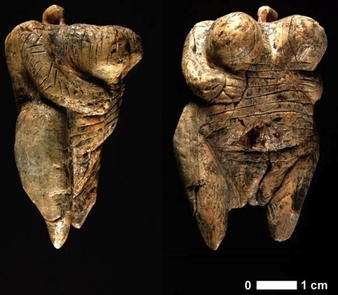
These weren’t survival tools. They were something more: proof early humans assign emotional meaning to physical objects and use them to strengthen bonds. That capacity for symbolic giving is one of the things that makes us us.
Homer, Hospitality, and Birthday Candles
The ancient Greeks took gift giving in a different direction, viewing it as a civic duty. In Homer’s Odyssey, hospitality and gift giving were portrayed as moral obligations. You offered gifts because it was the right thing to do. And it might also have been a hedge against risk: the Greeks might have believed that people might be a god in disguise.
The Greeks also gave us birthday gifts. They believed evil spirits visited a person on their birthday, and gifts and good wishes were a form of protection. Even the tradition of blowing out candles began as a message to the gods: keep this person safe.
The First Gift-Giving Season
Rome gave us something recognisable to modern eyes: a dedicated season of gift exchange. During Saturnalia, a week-long December festival, Romans exchanged wax figurines called sigillaria, candles symbolising the return of light after the solstice, and small tokens of goodwill.
When January arrived, another round of gifts called strenae — named after the goddess Strenia — were exchanged to bring fortune for the new year. The French word for a New Year’s gift, étrenne, still echoes this Roman tradition. If Christmas gift giving feels ancient, it’s because it is. It runs in a direct line from Saturnalia to your living room.
The Obligation to Give, Receive, and Reciprocate
In 1925, French anthropologist Marcel Mauss published The Gift: Forms and Functions of Exchange in Archaic Societies, a study of gift exchange across cultures that became one of the most influential texts in social science.
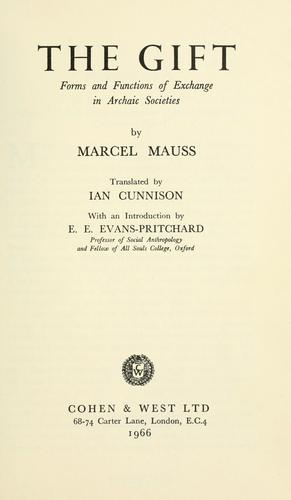
Mauss argued gift giving was never truly “free.” Across every society he studied, from Polynesia to the Pacific Northwest, he found a triple obligation: to give, to receive, and to reciprocate.
This wasn’t cynical. It was the engine of social life. Gifts created bonds, established trust, and maintained communities. Mauss called gift exchange a “total social fact”. Something that touches every dimension of human existence: economic, legal, spiritual, and moral. What cavemen did with carved teeth, and what the Romans did with wax figurines, was all part of the same deep pattern.
Mass Production Meets the Christmas Tree
For most of human history, gifts were made by hand. That changed with the Industrial Revolution. By the 19th century, mass production made goods affordable and accessible to ordinary people for the first time. In Victorian England, Queen Victoria and Prince Albert helped popularise the Christmas tree and family-centred gift exchange. St Nicholas evolved into Santa Claus. Christmas shopping became a cultural institution.
The what of gift giving transformed. But the why never did. People were still reaching for the same thing they’d always reached for: a tangible way to say I was thinking of you.
Science Catches Up
In 2008, researchers Elizabeth Dunn, Lara Aknin, and Michael Norton published a landmark study in Science demonstrating that spending money on others — even as little as $5 — produced greater happiness than spending on yourself. Brain imaging studies have since shown that giving activates the same dopamine and oxytocin reward pathways associated with pleasure, trust, and social connection.
The “warm glow” your grandmother talked about? It’s neurochemically real. And it doesn’t just happen when the gift is opened — it starts when you’re choosing it, wrapping it, imagining the moment.
Forty thousand years of human instinct, confirmed by an fMRI machine.
So Why Is It So Hard Now?
Here’s the strange part. We know gift giving matters historically, anthropologically, and neurologically. We feel it matters. And yet, in modern life, it’s one of the first things to slip.
Not because we stop caring. Because life gets loud. Birthdays pass while we’re buried in work. We mean to send something for a friend’s new baby and then three months have gone by. We forget what our best mate mentioned wanting back in February. The intention is there. The follow-through disappears into the noise.
The irony is that we live in an age where you can order almost anything and have it delivered tomorrow. But we’ve lost the simple infrastructure our ancestors had. In a village, you knew when someone’s child was born. In a tribe, you remembered who helped you through winter.
Modern life gave us infinite choice and took away the natural rhythms that made giving easy.
Ribyn: Built for the Oldest Human Instinct
That’s why we built Ribyn. Not to add another notification to your day, but to help you hold onto the people who matter. And to follow through on the instinct that’s been with us since someone first carved a stone and handed it to a friend.
Ribyn helps you remember the dates, the preferences, and the little things people mention in passing. It helps you choose a thoughtful, tangible gift. The kind that becomes a physical reminder of your relationship, the way gifts have always worked.
Because the instinct to give hasn’t faded. It just needs a little help.
Gift giving has been connecting humans for 40,000 years. Ribyn makes sure you never miss your turn.